
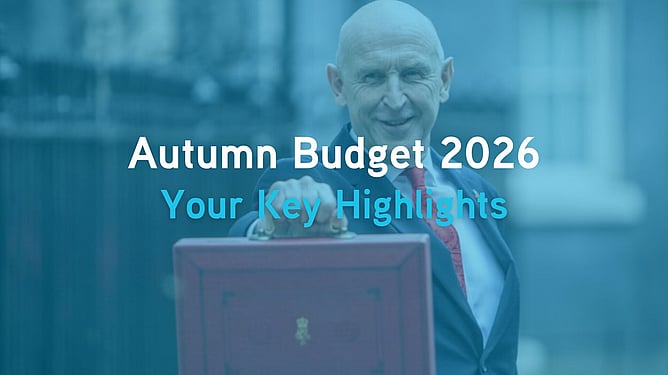
Budget 2026: What It Means for You and Your Business
Chancellor John Healey promised families and businesses “breathing space” in his first Budget on 28 October 2026. On the headline rates, he delivered. Income Tax, National Insurance and VAT rates were left alone, the National Living Wage rises 3.9% to £13.21 an hour, and the Trading Allowance goes up from £1,000 to £3,000.
Breathing space is not the same as standing still, though. Almost every measure has a date attached, and most of those dates fall in April 2027 or later.
A few that stand out:
Income Tax on savings interest and rental profits rises by four percentage points from 6 April 2027.
The Business Asset Disposal Relief lifetime limit halves to £500,000 from 6 April 2027, so a rushed contract in March won’t necessarily protect the current position.
Company cars, vans and medical cover move onto the payroll from 6 April 2027.
Much of this still has to pass through Parliament, and the detail may change. The direction is clear, and the best time to plan is while you still have the room to do it.
Download our full Budget 2026 guide below to see what applies to you as an employee, business owner, landlord, saver or someone building wealth.
If you’d like to talk through how the Budget affects you, your family or your business, get in touch and we’ll go through it together.